If you are reading this, outbound is probably already running in your company.
Your SDRs are working accounts every day. Your tools are in place. The CRM is packed with activity. Marketing is putting out campaigns, content, and events. On the surface, it looks like a functioning machine.
But the conversation in leadership meetings keeps coming back to the same uncomfortable question: if we are doing so much, why does pipeline still feel unpredictable?
We’ve worked inside outbound for a decade now enough to see what usually goes wrong.
Outbound starts slipping when the business gets more complex and the team has to make more decisions, faster, with less shared context.
Ownership gets fuzzy, timing gets missed, and follow-ups lose relevance because nobody has the full picture.
By the time revenue takes a hit, those cracks have usually been there for weeks or months.
Outbound gets blamed first because it is the most sensitive motion. It depends on timing, targeting, and clean context. When those break, reply rates fall and meeting quality takes a hit.
Why outbound-only works… until it doesn’t
Outbound is a precision motion. When it works, it works because three things stay true.
- First, you know exactly who you are targeting.
- Second, your team has enough context to speak to the right problem at the right time.
- Third, decisions get made consistently, so execution looks the same even when different people touch the same account.
Early stage teams get these “for free.” The ICP is still tight.
The product story is still one story.
The founder is still close enough to revenue that context lives in conversations, not in dashboards.
People sit in the same room, figuratively or literally, so coordination happens without a formal system.
Then things grow.
More segments and personas.
More tools.
More handoffs.
Almost nobody removes anything as they grow. And outbound becomes the first place the pain shows up, because it’s the motion that depends most on timing and context.
That’s when effort disconnects from results. Activity stays high. Outcomes don’t.
The hidden causes most teams overlook
Most teams try to fix outbound where it is visible: lists, copy, deliverability, sequences, activity targets.
The root causes sit one level below.
Leak 1: CRM data not reliable
This one is sneaky because everyone still logs into the CRM. The problem is trust.
Stages drift. Fields are incomplete. Buyer context lives in Slack, call notes, and inbox threads. Forecast reviews turn into “what’s the real number?”
This is not cosmetic. Gartner cites research estimating poor data quality costs organizations $12.9 million per year on average.
The point is not the exact dollar figure for your company. The point is the mechanism: unreliable data forces rework, slows decisions, and makes outbound generic because reps cannot see clean context.
Leak 2: Revenue reporting mismatch
Marketing dashboards say one thing. Sales dashboards say another. Attribution does not line up with pipeline. Leadership stops trusting measurement, so the team spends time reconciling instead of deciding.
Forrester shared that 64% of B2B marketing leaders in its Marketing Survey 2024 do not trust their organization’s marketing measurement for decision-making.
Once trust drops, speed drops. Outbound performance follows because “why now” becomes unclear.
Leak 3: The founder doing RevOps
A lot of teams do not hire RevOps early. The founder becomes the routing logic, the deal quality filter, the priority setter, and the referee between functions.
It works until the team scales. Then the founder steps back, and suddenly the system has no system. Outbound gets blamed, but the real issue is decision-making without shared rules.
If you’re thinking how to build a scalable GTM engine without hiring a full revops team, this could help.
Why Outbound-only becomes expensive so fast
Once your system starts leaking, you pay twice.
You pay in direct costs, because the stack grows, activity grows, and headcount grows.
You pay in time, because sellers spend more time maintaining the system than selling inside it.
Salesforce reported that sales reps spend just 28% of their week actually selling, with the majority of time consumed by other tasks such as deal management and data entry.
HubSpot’s 2024 Sales Trends Report also points to the same productivity squeeze. In the key findings, it states that sales reps only spend about two hours per day actually selling.
So when your GTM adds friction, it doesn’t steal extra time. It steals the most valuable time you have.
This is why outbound-only starts feeling like a treadmill.
You push more to get the same outcome, then you push more again, then you start hiring and stacking tools to compensate, and the business starts paying a complexity tax it never budgeted for.
But if you zoom out, the pattern is consistent:
Decisions slow because clarity is missing.
Work duplicates because people compensate for missing clarity.
Outbound relevance drops because the right context is not available at the right time.
Trust drops because dashboards do not match reality.
Revenue shows it later as missed targets, longer cycles, or surprise churn.
That is why outbound-only fails as complexity increases. Outbound is the first place the system’s friction becomes visible.
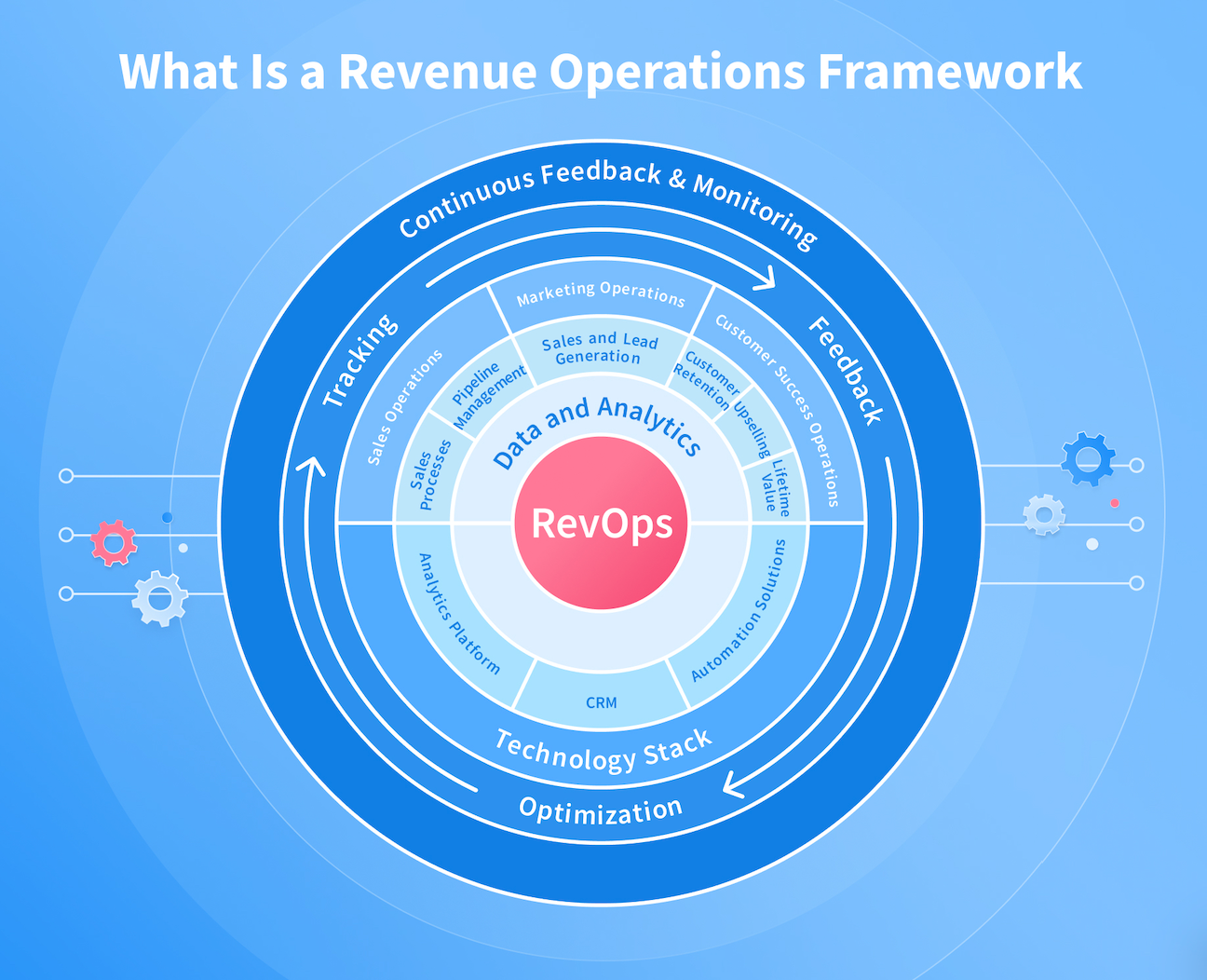
What “Revenue orchestration” means:
A lot of teams hear “RevOps” and picture dashboards, spreadsheets, and someone nagging salespeople to update fields.
That is not what we mean.
RevOps orchestration is an operating layer that turns activity into outcomes by removing ambiguity. It connects targeting, context, decision rules, and execution so the same situation gets handled the same way every time.
Here is the simplest way to think about it.
- Accounts
This is the targeting layer. You define who you want to win, in a way the whole team shares. Not a vague ICP. A real definition that prevents drift.
- Signals
Signals are observable events that give you context. Engagement, intent, hiring changes, role changes, product interest, expansion indicators. Signals answer the question, why now, without guesswork.
- Triggers
Triggers are the decision rules. When certain signals show up together, a trigger fires. That removes the pause where people debate what to do next.
- Actions
Actions are what the system does when a trigger fires. It routes a lead, assigns an owner, changes a nurture path, creates a task, switches an outreach play, or escalates risk. The action is pre-decided, so execution stays consistent.
This is orchestration. It shortens the distance between signal and action. It reduces duplicate work. It protects your data. It speeds up decisions.
And it makes outbound predictable again, because outbound stops running as a standalone channel and starts running inside a unified revenue logic.
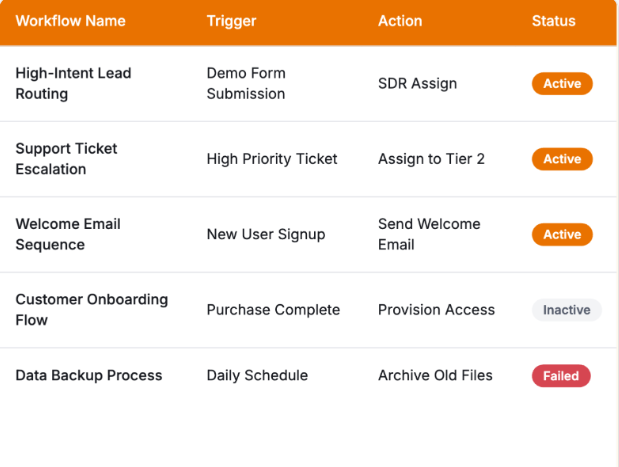
Leadle’s Journey from Appointment Setting to Revenue Orchestration:
We did not pivot because outbound wasn’t making an impact. We pivoted because outbound, on its own, rarely solves the real problem once a company scales.
In our work, we kept seeing the same situation:
Outbound activity looked healthy.
The CRM looked busy.
The tech stack looked mature.
But underneath, the system was disconnected. The wrong prospects got the wrong messages at the wrong time. Handoffs leaked. Attribution stayed unclear. Teams stopped trusting their own numbers.
At that point, “more appointments” does not fix the foundation. It increases load on a shaky system.
So we shifted the promise.
Not “more outbound.”
A RevOps orchestration layer that lets outbound, inbound, partner, and customer motions operate with one shared revenue logic.
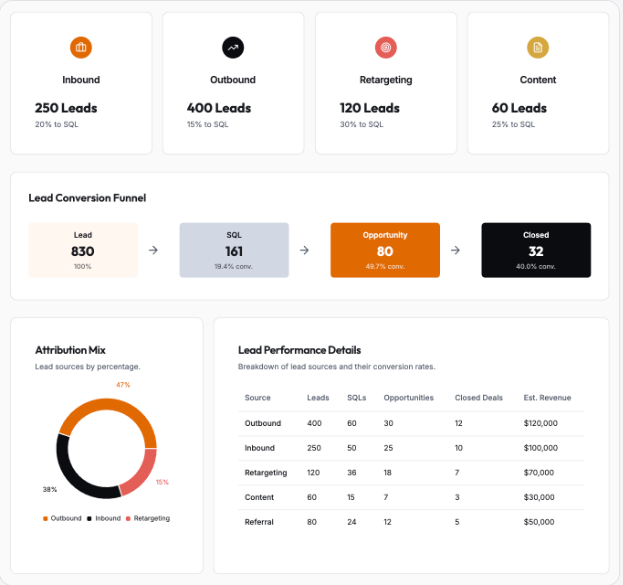
When do you need RevOps (a simple self-check)
If two or more are true, outbound-only will keep getting more expensive:
CRM data not reliable in weekly reviews.
Revenue reporting mismatch across dashboards.
Attribution feels unclear or gets debated.
SDRs and AEs duplicate touches without realizing.
Leadership asks for “the real number” outside the system.
The founder is still acting as the routing and prioritisation layer.
What we offer now (and what it means for you)
Today, Leadle operates as a RevOps orchestration partner.
Which means the work now starts with the system itself, not outbound tactics.
We focus on getting clarity around four things:
who you’re going after,
what signals matter,
when a decision needs to happen,
and what action should follow, every time.
Outbound doesn’t sit next to that system anymore. It runs inside it. So do inbound, partners, and expansion.
One set of signals. One way decisions get made. One view of what’s actually happening in revenue.
That’s what we built AllBound OS for.
As an operating layer for teams that feel GTM is getting harder to manage and want revenue to scale without adding chaos.
If that’s where you’re at, this shift matters more than any single channel change.
And if this feels close to home, we’ve been helping teams clean this up piece by piece. Happy to walk you through how it works if that’s useful.
FAQs:
- When do you need RevOps?
If you want a direct answer, you need RevOps when your growth stops feeling repeatable.
You hear “CRM data not reliable” in weekly reviews.
You see a revenue reporting mismatch across tools and teams.
Outbound volume rises but meeting quality stays inconsistent.
Multiple teams touch the same account without coordination.
Leadership asks for numbers outside the dashboard.
The founder is still doing RevOps work, acting as the routing and prioritization layer.
- What is RevOps as a Service for SaaS
An ongoing ownership model for the operating layer: definitions, CRM governance, routing logic, measurement, and trigger-to-action workflows, so the system stays reliable while you scale.
- Why is CRM data not reliable
Most teams treat fields and workflows as optional, store context outside the CRM, and use inconsistent stage definitions. The result is delayed updates, missing context, and dashboards nobody trusts.
- What causes revenue reporting mismatch
Different tools report different slices of reality, teams use different definitions, and attribution is not tied to the same revenue logic. Measurement trust drops, then decision speed drops.