Lead generation gets you into the right accounts.
Appointment setting gets you into the conversation.
Neither matters much if those conversations never turn into pipeline.
That is the big shift in 2026.
The job is no longer just to find contacts and book meetings. It is to find the right market, give buyers a reason to respond, qualify properly, and learn what happens after the call.
That's what we cover in this guide.
What is B2B lead generation and appointment setting?
B2B lead generation is the process of finding companies and buyers who are likely to have a need for what you sell. Appointment setting is the work of reaching them, qualifying the interest, and getting the right people into a sales conversation.
Put simply:
Lead generation finds the opportunity.
Appointment setting starts the conversation.
Pipeline tells you whether it was a good one.
A strong outbound setup connects all three.
ICP → Accounts → Buyers → Outreach → Meeting → Opportunity → Pipeline
What is the difference between lead generation and appointment setting?
A lead generation provider may stop at giving you names and contact data.
An appointment setting agency usually owns more of the work between finding the prospect and getting them onto your calendar.
We prefer to connect both.
The team running outreach should know which meetings were good, which were poor fits, and which turned into opportunities.
Otherwise the next campaign starts with the same blind spots.
What changed in B2B lead generation in 2026?
Contact data is easy to get now.
That is no longer the hard part.
The harder questions are:
- Are these the right accounts?
- Why should they care now?
- Are we talking to the right person?
- Is the problem important enough to act on?
- Which channel gets their attention?
- What happens after they take the meeting?
That changes the job.
A list is useful.
It is not a strategy.
Why does the old way of lead generation struggle?
Big lists hide bad targeting
When a campaign is slow, the first response is often:
Send more.
But more volume does not fix a weak ICP.
We would rather split the market into smaller groups and see:
- which industry responds
- which persona gets the problem
- which trigger changes timing
- which group produces opportunities, not just replies
That gives you something useful to build on.
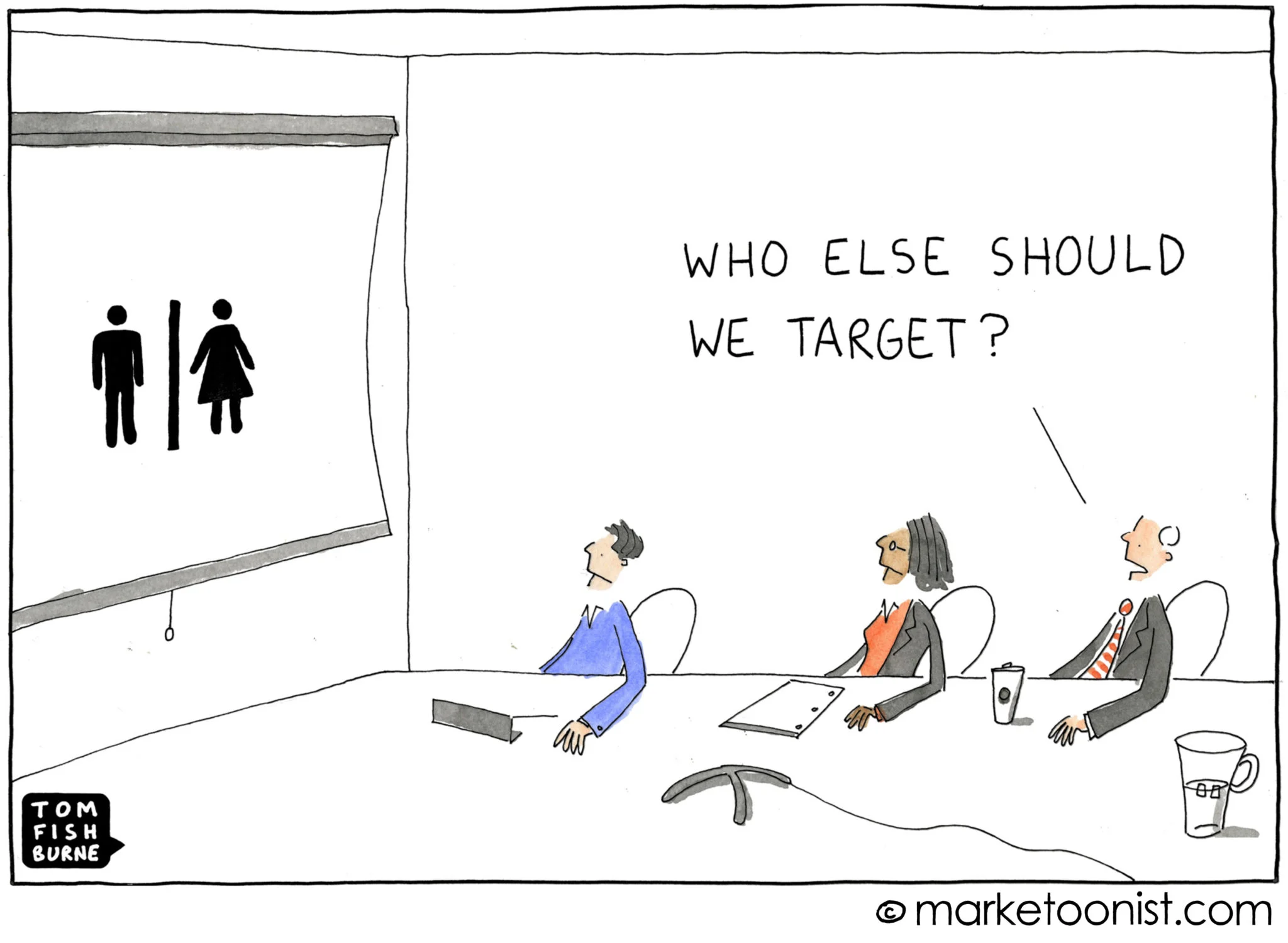
Personalisation is not relevance
Mentioning someone's latest LinkedIn post does not make a message relevant.
Good outreach answers a simpler question:
Why are you contacting this person now?
That could be:
- a new hire
- a market expansion
- a technology change
- a role-specific problem
- a clear use case
- a business trigger
The personalisation should support the reason for the message.
A booked meeting can still be a bad outcome
Calendar invites look good on a dashboard.
But the useful chain is:
Meeting booked → Meeting held → Qualified opportunity → Pipeline
Ten meetings that create four opportunities can be much better than twenty meetings that go nowhere.
That is why meeting quality matters as much as meeting volume.
For a detailed read: Sales Metrics That Matter in 2026: Meetings Booked vs Pipeline Value
How does B2B appointment setting work in 2026?
A good appointment setting program starts well before the first email.
1. Define the market
Get clear on:
- company size
- geography
- industry
- use case
- exclusions
- buying signals
2. Map the buyers
One title rarely tells the whole story.
Look at:
- problem owner
- champion
- decision-maker
- influencer
- potential blocker
3. Build clean account and contact data
This includes sourcing, enrichment and enough context to segment accounts properly.
4. Give outreach a reason to exist
For every campaign, answer:
Who are we speaking to?
What problem are we leading with?
Why now?
Why us?
What is the next step?
5. Use the right channels
For most B2B outbound programs, that means some mix of:
Email + LinkedIn + calls
Email gives reach.
LinkedIn helps with context and familiarity.
Calls give you feedback quickly.
6. Qualify the conversation
Before handing the meeting to sales, make sure the prospect understands why the meeting is happening and fits the basic criteria.
7. Hand over context, not just a calendar invite
Sales should know:
- who the buyer is
- what they responded to
- what problem came up
- what was already discussed
- what they expect from the meeting
8. Feed the result back into outbound
Did the meeting happen?
Was it qualified?
Did it become an opportunity?
Why or why not?
That feedback should shape the next campaign.
Also Read: How to Build an Outbound Strategy for a New B2B Product or Service
What counts as a qualified sales appointment?
This should be agreed before outreach starts.
A booked calendar slot is not enough.
We usually look at four things.
Account fit
Is the company inside the agreed ICP?
Persona fit
Is this person relevant to the problem or buying process?
Problem fit
Is there a real connection between their situation and what you sell?
Conversation fit
Do they understand why the meeting is happening and want to explore it?
Budget and purchase timing may also matter depending on the sales motion.
But every cold prospect does not need to arrive with approved budget and procurement waiting.
Discovery still has a job to do.
Thinking about how to generate leads for a niche product? This could help get you started
What results should you expect from appointment setting?
There is no honest universal answer.
Meeting volume depends on:
- TAM size
- geography
- buyer seniority
- ACV
- market maturity
- strength of the offer
- brand awareness
- proof
- channel mix
A better way to measure performance is:
Accounts contacted → Positive conversations → Meetings held → Qualified opportunities → Pipeline → Closed-Won
This shows where the campaign is actually working.
Or breaking.
Check our case studies page for a more detailed analysis of the clients we have worked with.
How long does appointment setting take to work?
There are two different questions here.
How long until the first meeting?
And:
How long until you know the motion is repeatable?
The first can happen quickly.
The second takes longer.
A few early meetings do not tell you enough.
You still need to learn:
- who responds
- which message works
- which meetings qualify
- where deals stall
- what buyers keep asking
- what should change next
Early outbound should produce meetings.
It should also make the next campaign better.
How much do B2B lead generation and appointment setting services cost?
Pricing usually falls into three models.
Monthly retainer
You pay for the team, tools, data, campaign management and ongoing iteration.
This usually makes sense when the provider owns most of the outbound motion.
Pay per appointment
You pay when a meeting is booked or held.
The important question is:
What counts as an appointment?
Booked?
Held?
Qualified?
Those are very different things.
Hybrid pricing
A base fee covers execution, with an additional fee tied to meetings or outcomes.
When comparing appointment setting pricing, look at what is actually included:
- data
- tools
- email infrastructure
- calling
- copy
- campaign management
- qualification
- CRM updates
- reporting
- no-show handling
Price per meeting means very little without that context.
When should you outsource lead generation and appointment setting?
Outsourcing can make sense when you need to move quickly without building an SDR team first.
Common cases:
- entering a new geography
- launching a new product or service
- founder-led prospecting is no longer sustainable
- AEs are spending too much time prospecting
- you want to validate outbound before hiring internally
- you need extra pipeline without a long hiring cycle
It works less well when nobody internally owns sales.
An agency can create conversations.
Someone inside still needs to run discovery, close deals and tell the outbound team what is happening after the meeting.
Should you hire SDRs or use an appointment setting agency?
A simple way to think about it:
Use an agency when you need speed, testing capacity or extra execution.
Build internally when the motion is proven, there is enough volume to support the team, and someone can manage it properly.
A hybrid model also works well.
Your internal team owns discovery and closing.
The external team owns prospecting and initial qualification.
The important part is the feedback loop between both.
How do you choose a B2B appointment setting company?
Ask practical questions.
1. Who defines the ICP?
If the process starts and ends with:
“Send us your target titles.”
You are getting execution, not much strategy.
2. What counts as a qualified meeting?
Get the definition in writing.
3. Which channels are included?
Ask what “multichannel” means.
4. Who owns the data and infrastructure?
Know what happens if the engagement ends.
5. What happens with no-shows?
Are they rescheduled?
Replaced?
Still billed?
6. How is meeting quality measured?
Look beyond meetings booked.
Ask about meetings held and opportunities created.
7. What happens when the first campaign is weak?
This one matters.
ICP, messaging and cohorts will sometimes need to change.
The provider should have a clear process for that.
8. Can you see prospect feedback?
Replies and call notes contain more useful information than the dashboard.
What are the red flags when hiring a lead generation agency?
A few are worth watching.
- guaranteed meeting numbers before the agency understands your market
- no clear qualification criteria
- reporting that stops at meetings booked
- huge send volumes presented as the strategy
- one message used across very different buyer groups
- no feedback from sales
- no clear ownership of the data or campaign infrastructure
- no plan for what happens if the first ICP does not respond
Outbound will not be perfect on day one.
What happens next matters more.
We have compared the best B2B lead generation and appointment setting agencies in 2026. Access the blog here.
Lead generation vs pipeline generation: what do you actually need?
Sometimes “we need more leads” is the wrong diagnosis.
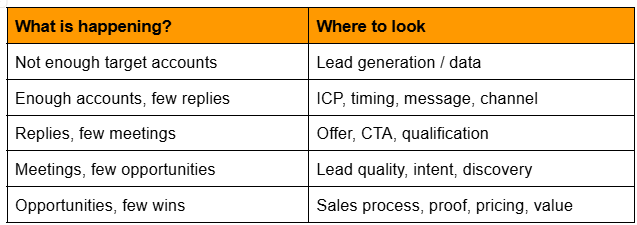
The service you buy should match the part of the funnel that is actually broken.
More leads will not fix a conversion problem.
How Leadle approaches lead generation and appointment setting
Our approach has changed a lot over the years.
A few things now sit at the centre of how we work.
Start with the market, not volume
We define ICPs, exclusions and cohorts with the client before deciding how much outreach to run.
Use signals where they help
Hiring, expansion, leadership changes, technology shifts and other signals can improve timing.
Not every account needs one.
Use more than one channel
Email works.
LinkedIn works.
Calling works.
The mix depends on the market and the buyer.
Look beyond meetings booked
We want to know:
Did they show?
Did they qualify?
Did they become pipeline?
Keep the learning
A campaign should leave behind:
- a sharper ICP
- better messaging
- useful objections
- stronger proof
- better qualification
- clearer buying signals
The next campaign should not start from zero.
Is appointment setting still worth it in 2026?
Yes, if it creates conversations with buyers who make sense for your business.
Not if the service is simply:
List → Blast → Calendar invite
A better motion looks like:
Market → Account → Reason to reach out → Conversation → Qualification → Meeting → Pipeline
The useful outcome is not just knowing how many meetings you booked.
It is knowing:
who responds, why they care, which meetings become opportunities, and what to do more of next.
That is what makes lead generation useful.
If you’re looking for a quick way to get started with pipeline generation, book a call with us. Happy to walk you through our services.
FAQs:
What is B2B lead generation?
B2B lead generation is the process of finding companies and buyers who may have a relevant need for your product or service. It usually includes ICP definition, account research, contact sourcing, data enrichment and segmentation.
What is B2B appointment setting?
B2B appointment setting is the work of contacting target buyers, managing replies, qualifying interest and booking sales conversations with relevant prospects.
What is the difference between lead generation and appointment setting?
Lead generation finds potential buyers. Appointment setting turns those prospects into sales conversations. A strong outbound program connects both to pipeline and revenue.
What makes an appointment qualified?
A qualified meeting should involve a relevant account and buyer, have a clear connection to the problem being solved, and include a prospect who understands why the conversation is happening.
Should appointment setting be outsourced?
It can make sense when you want to enter a new market, add outbound capacity or test the motion before hiring an internal SDR team. Someone inside the company should still own sales strategy and closing.
How should appointment setting ROI be measured?
Start with meetings held, then track qualified opportunities, pipeline created and Closed-Won revenue. Meetings booked alone do not show whether the program is producing useful pipeline.